The Buffy Sainte-Marie Controversy Shows Why Public Institutions Must Verify First
May 18, 2026 · iVoteOneBC research desk
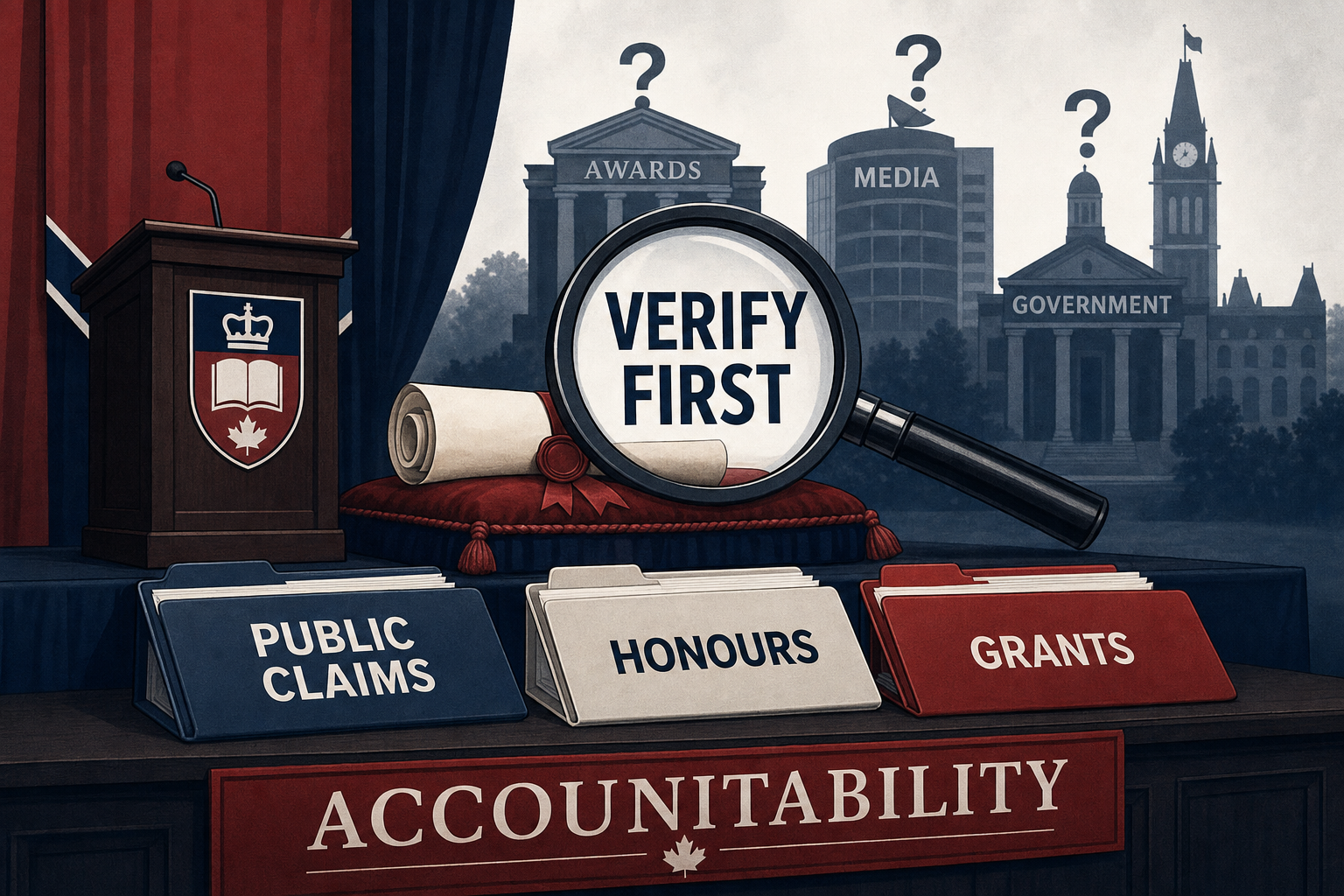
A Facebook video from Mario4thenorth, branded with Making a Killing / OneBC, uses the Buffy Sainte-Marie controversy to argue that Canadian institutions accepted powerful public claims before doing the hard verification work.
The clip is blunt and politically charged. The responsible way to handle it is to separate what is already documented from what still needs careful proof.
The documented accountability issue is real: CBC’s Fifth Estate investigation reported that Sainte-Marie’s claims to Indigenous ancestry were contradicted by family members, birth records and historical documents. Sainte-Marie has denied personally misrepresenting her background and has said she has deep roots in the Native community. Since the investigation, several honours and awards have been reviewed, revoked or surrendered.
What checks out
CBC reported in 2023 that Sainte-Marie was born Beverley Jean Santamaria in Stoneham, Massachusetts, and that documents and family accounts contradicted the long-public story that she was born Cree in Saskatchewan. The report also quoted Sainte-Marie’s lawyer saying she had not personally misrepresented her ancestry.
The institutional response has been significant. The University of Toronto’s Governing Council voted to rescind Sainte-Marie’s 2019 honorary degree in 2025. Multiple music awards and honours were also later reviewed, revoked or returned, according to public reporting.
That is the core accountability point: public institutions attached prestige, authority and cultural legitimacy to a claim that later came under serious documentary challenge.
What should not be collapsed into one slogan
The video also uses wider language about residential-school narratives and “mass graves.” That is a separate and highly sensitive subject. It should not be casually folded into the Sainte-Marie ancestry controversy as if one identity case proves or disproves every claim about residential schools, unmarked graves, missing children or reconciliation policy.
OneBC supporters can make a stronger argument by staying precise: public claims that unlock honours, grants, political authority or institutional credibility should be verified before they are elevated — and re-examined when credible contrary evidence emerges.
Questions public institutions should answer
- What verification was done before honours, awards or grants were issued?
- Who was responsible for checking identity-linked claims?
- Were public funds, public honours or institutional platforms awarded partly because of those claims?
- When contrary evidence emerged, how quickly did institutions review the record?
- Will universities, broadcasters, foundations and governments now publish clearer verification standards?
The OneBC lesson
The lesson is not that every disputed public story should become a witch hunt. The lesson is that governments and institutions should stop outsourcing truth to slogans, celebrity, activist pressure or media consensus.
British Columbians are being asked to accept major changes to land, governance, education, culture and public funding on the basis of claims that are often politically protected from scrutiny. That is not healthy. Scrutiny is not hate. Verification is not disrespect. Public money and public authority require evidence.
Bottom line: the Buffy Sainte-Marie controversy is a warning sign for every institution in Canada. Verify first. Honour second. Fund second. Rewrite public narratives only after the evidence has been tested.