Dallas Brodie Puts Bill 20 Under the Microscope: What Does the K’ómoks Treaty Mean for B.C.?
May 21, 2026 · iVoteOneBC research desk
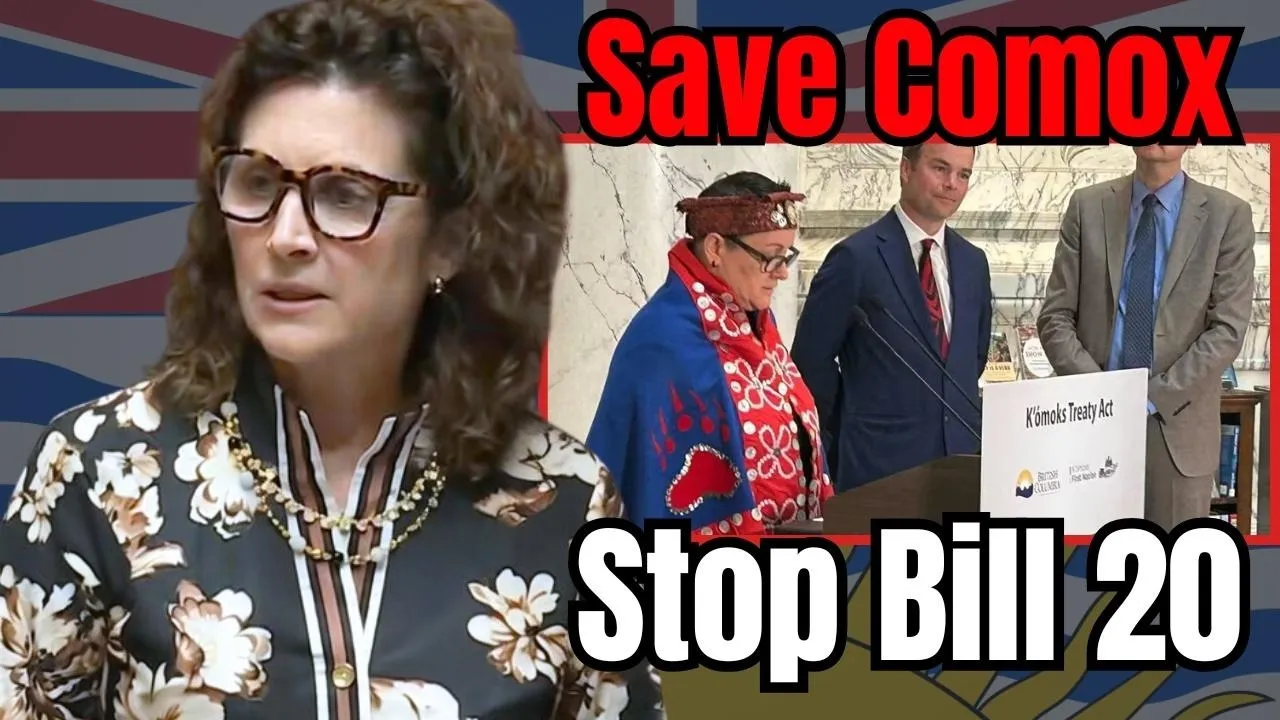
Dallas Brodie’s new video gives OneBC supporters a concrete file to organize around: Bill 20, the K’ómoks Treaty Act, and the bigger question of whether B.C.’s treaty process protects taxpayers, neighbouring communities, property certainty and democratic consent.
The K’ómoks treaty is not a small symbolic file. The provincial government says the treaty would recognize K’ómoks First Nation jurisdiction and law-making authority over its treaty lands, while also setting out land, fiscal and governance arrangements. Supporters frame that as reconciliation and legal certainty. Brodie frames it as a bad deal — and the public deserves to examine both the official terms and the political objections.
That is the real value of this video. It moves the debate away from slogans and into specifics: land transfers, future land-acquisition rights, local impacts, overlap concerns, governance powers and what, if anything, taxpayers receive in return.
Brodie’s core argument is that the political class treats the word “treaty” as if it ends debate. Her answer is that a treaty is still a deal — and voters are allowed to ask whether the deal is fair, clear and accountable.
That is exactly where OneBC can lead. British Columbians are not wrong to ask:
- What land is transferred, and what land may be acquired later?
- What fiscal commitments are made by provincial and federal taxpayers?
- What law-making powers apply on treaty lands?
- How are neighbouring First Nations and local governments affected?
- Does the treaty reduce legal uncertainty — or create new layers of jurisdiction and future claims?
- Why are voters learning the details only after decades of negotiation?
Good faith reconciliation should be transparent enough to defend in public. If the deal is fair, government should be able to explain it plainly.
This site will not turn treaty accountability into attacks on Indigenous people. Indigenous peoples have constitutional rights. K’ómoks citizens have their own history, community and public position. The question here is government policy: whether B.C. and Ottawa negotiated a deal that protects the broader public interest while respecting rights and creating real certainty.
That is a fair political question. It belongs in the open. The NDP government cannot ask voters to accept DRIPA, UNDRIP implementation, modern treaties, land transfers and new jurisdictional arrangements while treating ordinary British Columbians as spectators.
Bill 20 sits inside a larger B.C. debate over DRIPA, property rights, Aboriginal title litigation, overlapping claims and public consent. OneBC’s opportunity is to make that debate factual and concrete: read the bills, show the maps, follow the money, ask who has jurisdiction, and insist that taxpayers and local residents be treated as stakeholders.
Brodie’s video is worth watching because it names the uncomfortable issue: reconciliation policy is not automatically good policy. If government is transferring land, money and authority, the public deserves receipts.
Bottom line: Bill 20 should not be waved through on political reverence. It should be tested like every major public deal: what is transferred, what is owed, who decides, who pays, and what certainty does B.C. actually get?
- Dallas Brodie video, May 21, 2026: Brodie Demolishes NDP’s Land Giveaway — New BC Treaties Need to STOP!
- B.C. Government, April 14, 2026: K’ómoks Treaty legislation introduced
- B.C. Government treaty negotiations page: K’ómoks treaty negotiations
- K’ómoks First Nation treaty information: K’ómoks Treaty page
This article is political commentary on public legislation and government policy. It does not attack Indigenous people or deny Aboriginal rights; it asks whether the provincial and federal treaty process is transparent, fair and accountable.