OneBC Turns the Carney–Eby Pipeline Promise Into a Corridor-Accountability Test
July 14, 2026 · iVoteOneBC research desk
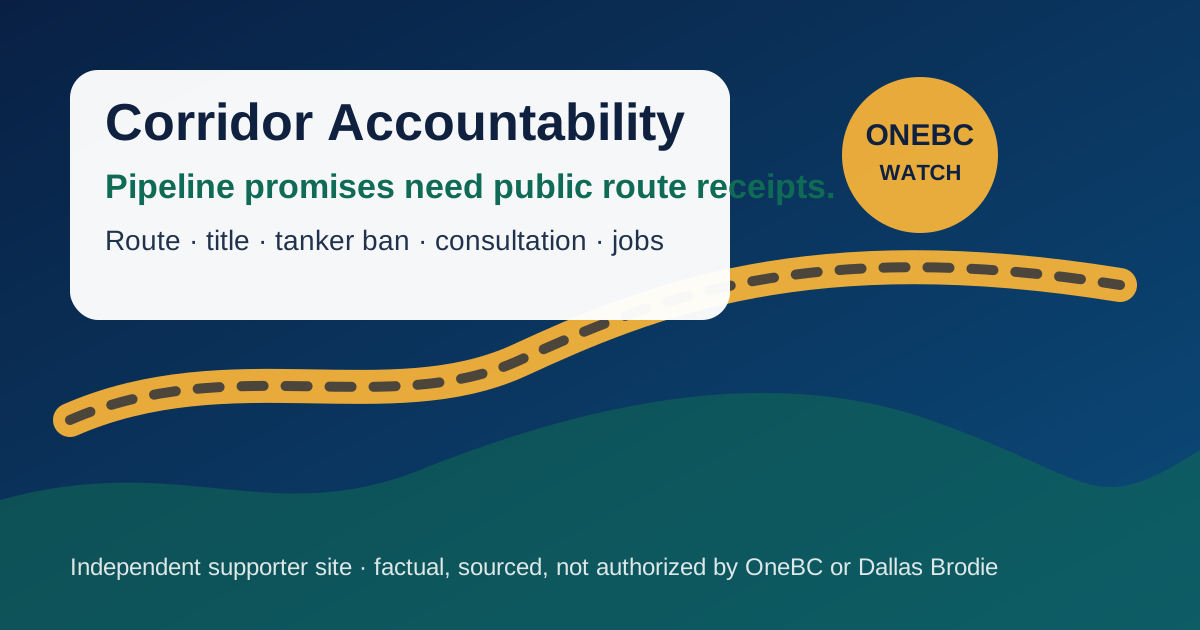
OneBC’s newest pipeline post lands on the right question: before Ottawa and Victoria sell British Columbians another energy-corridor promise, voters deserve a public route ledger, not another press-conference slogan.
What is verified
On July 14, 2026 UTC, OneBC’s official X account posted a graphic arguing that the Carney–Eby pipeline promise runs into four hard questions: the northern tanker-ban route, southern route pressure, title and consultation issues in the Lower Mainland, and whether consultation can still block a project after politicians announce momentum.
That graphic is OneBC’s political argument, not a court finding. The sourced record supports covering it as a serious accountability test: Prime Minister Mark Carney has publicly said Ottawa and B.C. are working through a new “cooperation and substitution” framework for major projects, Premier David Eby has said B.C. and Canada will identify major projects for possible referral to the federal Major Projects Office, and Canada signed a July 2 reconciliation agreement with Musqueam that expressly concerns Musqueam rights and title interests.
OneBC’s own energy priority is also clear: the party says B.C. should get pipelines and resource development “out of the penalty box” by rewriting rules it says penalize development. That makes this a direct OneBC platform-watch item.
Why supporters should care
Pipeline politics usually fail when governments hide the difficult part. It is easy to say “major projects.” It is harder to tell voters the route, the legal checkpoints, the affected communities, the tanker-ban constraints, the consultation rules, and the final yes-or-no authority.
That is where OneBC’s pressure is useful. A pro-growth province needs more than photo ops. It needs public route receipts: who can approve, who can delay, what law applies, what land or title agreements matter, how jobs are measured, and whether a government can still say yes after every consultation box is checked.
The strongest supporter frame is not to overclaim. It is to demand the ledger before the promise becomes campaign theatre.
The accountability checklist
- Route: publish the credible corridor options before asking voters to believe a pipeline is real.
- Tanker ban: say plainly whether the northern route is politically or legally available under the current federal oil-tanker moratorium.
- Title and consultation: explain how any route interacts with existing rights, title, reconciliation agreements, municipalities, private property, and affected First Nations.
- Decision authority: identify who can say yes, who can say no, and what happens if consultation produces objections.
- Jobs and revenue: show the project-by-project economic case, not just the headline promise.
This is exactly the lane where OneBC can look premier-material: ask the practical questions early, keep the claims sourced, and force governments to prove their “major projects” language can survive contact with real approvals.
How to track it honestly
Do not state that a pipeline is approved. Do not state that Musqueam has been given title over the whole Lower Mainland. Do not guess the route. The verified item today is narrower and stronger: OneBC has put the Carney–Eby pipeline promise on a public-accountability clock, and the government sources give supporters enough documents to ask disciplined questions.
That is good opposition politics. If Ottawa and Victoria have a real corridor path, they can publish it. If they do not, OneBC will have warned voters early.